Traditional Adobe Construction: A Future Sustainable Building Practice
- Student
- Savannah Valerio
- College(s)
- School of Architecture
- Faculty Advisor
- John Odhiambo Onyango
- Class Year
- 2023
Abstract
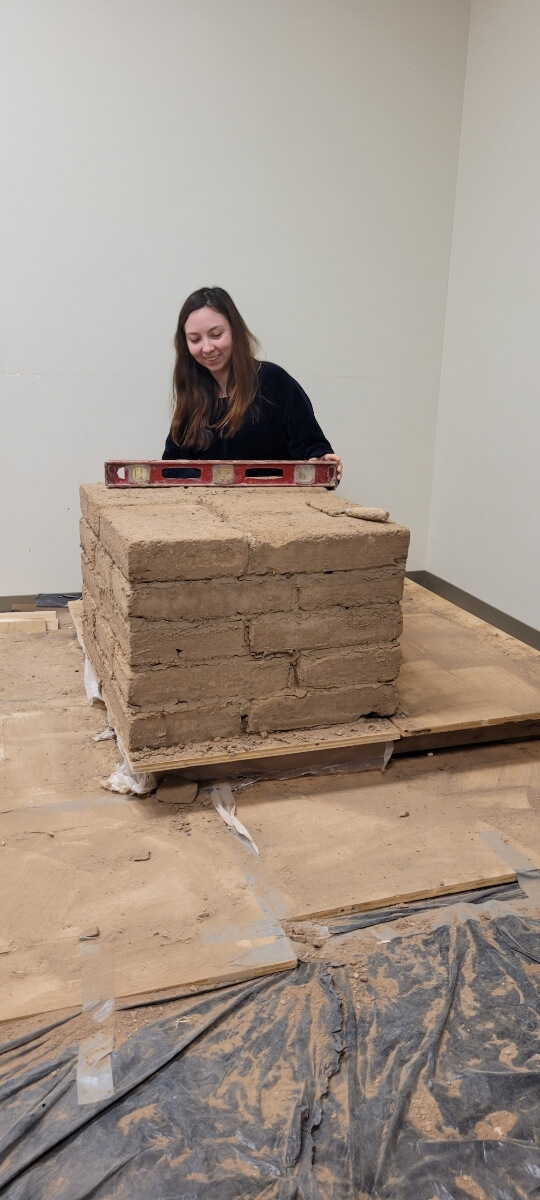
This project compares the thermal behavior of traditional adobe construction with modern wood-frame construction in New Mexico. To assess thermal behavior, greenTEG technology was used to measure the R-value of two different wall types in New Mexico. The data collected onsite was verified using Sefaira, a virtual environment simulator. A simple mockup of a traditional adobe wall was built to assess the thermal mass of adobe in a controlled environment. The results were compared to the ASHRAE-55 standards for human comfort. A life cycle sustainability assessment was conducted to evaluate the environmental, social, and economic impacts of each construction method. The results showed that the R-value of the wood-frame wall assembly was higher than that of adobe construction. Despite this, the adobe wall performed better in the overall Energy Use Intensity (EUI) assessment for the building. It also had a smaller carbon footprint. Overall, the durability, use of local materials, and low energy consumption make traditional adobe construction a more sustainable building practice. Further studies should be conducted to assess the thermal capacity of the adobe walls by building a guarded hotbox and measuring the transfer of heat from one side of the wall to the other.